Tooth Decay in Older Adults – Causes and Contributing Factors
Different factors can cause or contribute to tooth decay in older adults. The following are some examples of possible problems that older adults might face with their daily oral hygiene.
Inability to hold the toothbrush
A lack of strength because of arthritis, stroke, or other such illness can make even holding the handle of a toothbrush difficult.
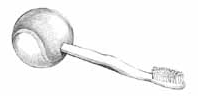
A solution to this problem could be to put the toothbrush in a Velcro strap; stick the toothbrush handle into a tennis ball or slide it in a bicycle handlebar grip. You can also carefully wrap the handle of the toothbrush with aluminum foil to make it bulky and easier to hold. 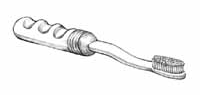
Inability to squeeze a tube of toothpaste
Again, a lack of strength because of arthritis, stroke, loss of dexterity, or other physical limitations can make this usually simple task become a chore.
To make squeezing the toothpaste tube easier, place the opened tube of toothpaste on the sink, slightly over the edge of the basin. Hold or place the toothbrush in the sink underneath, and using fingers or the side of the hand, gently press the tube to squeeze out the toothpaste.
There are also toothpaste products that are available in a pump dispenser. These may be easier to use and may work best for older adults who are unable to remove the cap from the tube of toothpaste. Also, toothpaste dispensers that easily put the correct amount of toothpaste on the brush are available online.
Difficulty flossing
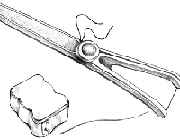 Holding and using a string of floss can be a problem for an individual with loss of dexterity in the hands and fingers.
To solve this problem, ask the caregiver for assistance with this part of the daily oral care regimen, or use a floss holder similar to what is pictured to the left. A caregiver may find using a floss holder easier.
Conditions that can make brushing and flossing difficult
Assistance with daily oral hygiene is often needed for older adults with loss of strength, mobility or dexterity, or other functional loss. Some possible conditions that can make brushing and flossing more difficult include the following:
- Tremors – these can be caused by Parkinson’s disease, cerebral palsy, or Huntington’s disease.
- Unable to floss, grip a toothbrush or tube of toothpaste – a possible result of paralysis from stroke, MS, Parkinson’s, brain or spinal cord injury, frailty, or other debilitating conditions or illnesses. This could also be caused by muscle weakness and a lack of strength, loss of coordination, or from limited range of motion caused by arthritis or other crippling illness.
- Cannot keep the mouth open – a possible result of paralysis or weakness from illness. This could also be caused by temporomandibular jaw (TMJ) joint disease, mouth infection, jaw clenching, or teeth grinding.
- Dementia or cognitive impairments – Alzheimer’s and other forms of dementia, as well as after effects of stroke, often cause the patient to forget to brush or forget how to brush.
- Visual impairments – Vision problems such as glaucoma, total blindness, macular degeneration and such can make a simple oral hygiene routine suddenly become a challenge.
- Difficulty swallowing – This can cause choking or a sensation of choking, and older adults may be afraid to brush their teeth for fear of choking. Parkinson’s disease or stroke patients may have difficulty swallowing.
- History of poor oral hygiene – If the individual did not take proper care of the teeth and gums when young, including daily brushing and flossing, it probably won’t be important to them as an older adult.
Forgetting to brush the teeth
An illness such as Alzheimer’s or another form of dementia or frailty may be the reason patients are not doing their daily hygiene, including brushing the teeth. This type of older adult will most likely need assistance and supervision with oral hygiene.
Be aware that a wet toothbrush does not mean the teeth were brushed; the patient may be brushing the same teeth over and over, using the wrong end of the toothbrush, or just wetting it. A family member or other caregiver can help the patient with his or her daily oral hygiene care. 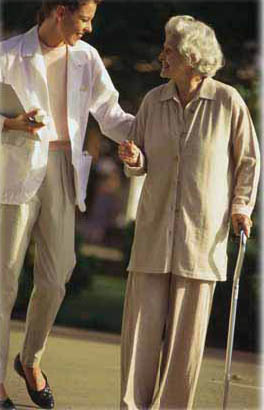
Some helpful tips to keep in mind are:
- The caregiver and the patient should be seated or standing comfortably. The caregiver should be slightly higher than the patient.
- Brush the person’s teeth in an area where it is easy to do the oral hygiene routine. This could be the bathroom, kitchen, at a table or with the patient reclining in a chair or bed.
- Have the oral care products, water, and a towel easily within reach.
- Be in a room with good lighting.
- Wear protective gloves (and face mask if needed).
- Explain and show each step to the patient before you do it.
- Keep to a daily routine, same time, same place.
- Be patient and caring and give positive feedback.
- Don’t rush.
A resistant patient
Is the person resisting because of pain from tooth decay or gum disease? Is the patient uncomfortable? Does the patient recognize or know you? Is there a language barrier? These are common issues to consider with an individual that is resisting the oral hygiene routine.
To help with the problem, make sure the surroundings are comfortable, familiar and pleasing to the patient. Create a routine that is calm and easy to do.
- Consult with the family if the patient is resistant.
- Discuss the use of mouth props.
- Take time to create a “bond” with the person.
- Respect privacy. Always ask permission to enter the room.
- Explain the routine step-by-step.
- Keep the routine the same each day; make it familiar.
- Use a quiet and soothing voice.
- Don’t rush the person or the procedure.
- Provide the patient with a distraction, if it would be welcomed, such as turning on the television, his/her favorite music, or let the person hold something special.
- When possible, let the patient help; hold and guide the patient’s hand holding the toothbrush.
- If there is a language barrier, find someone that can interpret for the older adult.
Other causes for dental decay
Other causes for dental decay can include a previous history of cavities, not visiting the dentist, dry mouth, and some physical illnesses.
Published with permission from Smiles For Seniors … an oral health initiative of the Ohio Dental Association.
For more information:
Go to the Dental and Oral Health (Seniors) health topic.